InterviewFeatured Artist

Akiko Iga
Keep your message going in two different worldviews
The first time I encountered Japan painting at university
――You are active as a Japan painter, but when did you first learn about Japan painting?

 
"I first chose Japan, printmaking, and Japan painting, and majored in Japan painting in my third year. Unlike watercolor and oil painting, Japan painting is used in which rock paint in a jar is placed on a plate and dissolved in a special nikawa liquid. I melt the rock paint with my fingers instead of a brush, and I feel that it suits me, including elements like when such a child does "oekaki"."

――Were you familiar with Japan painting even before you entered university? 
"There were no artists who were drawing Japan paintings close to me, and I rarely went to museums when I was in junior high school or high school. However, when I was 15 years old, I had the opportunity to travel around Europe and visit the major museums in Paris. When I took a shower of Western paintings, I suddenly thought, "It's difficult for Japan people to compete with Westerners with Western paintings, so I have to paint Japan people's paintings." At that time, I didn't aspire to be a painter, but maybe that's one of the reasons why I was attracted to Japan painting."

Expressing social themes in Japan paintings
――The themes of your works can be broadly divided into social and fantastical. First of all, please tell us about social themes.

 
"The reason I started drawing social themes was the Great East Japan Earthquake. After the shock of March 11, 2011, I began to think about what I had been drawing so far. At that time, a lot of information was mixed up and the truth was unknown. At that time, the switch in my head flipped, and I began to investigate the back side of society and the dark side. I collected information on the Internet every day and read a lot of books. In the process, the image of the painting came to mind, which led to the 311 series."

――I heard that you started drawing the Corona series in 2020. 
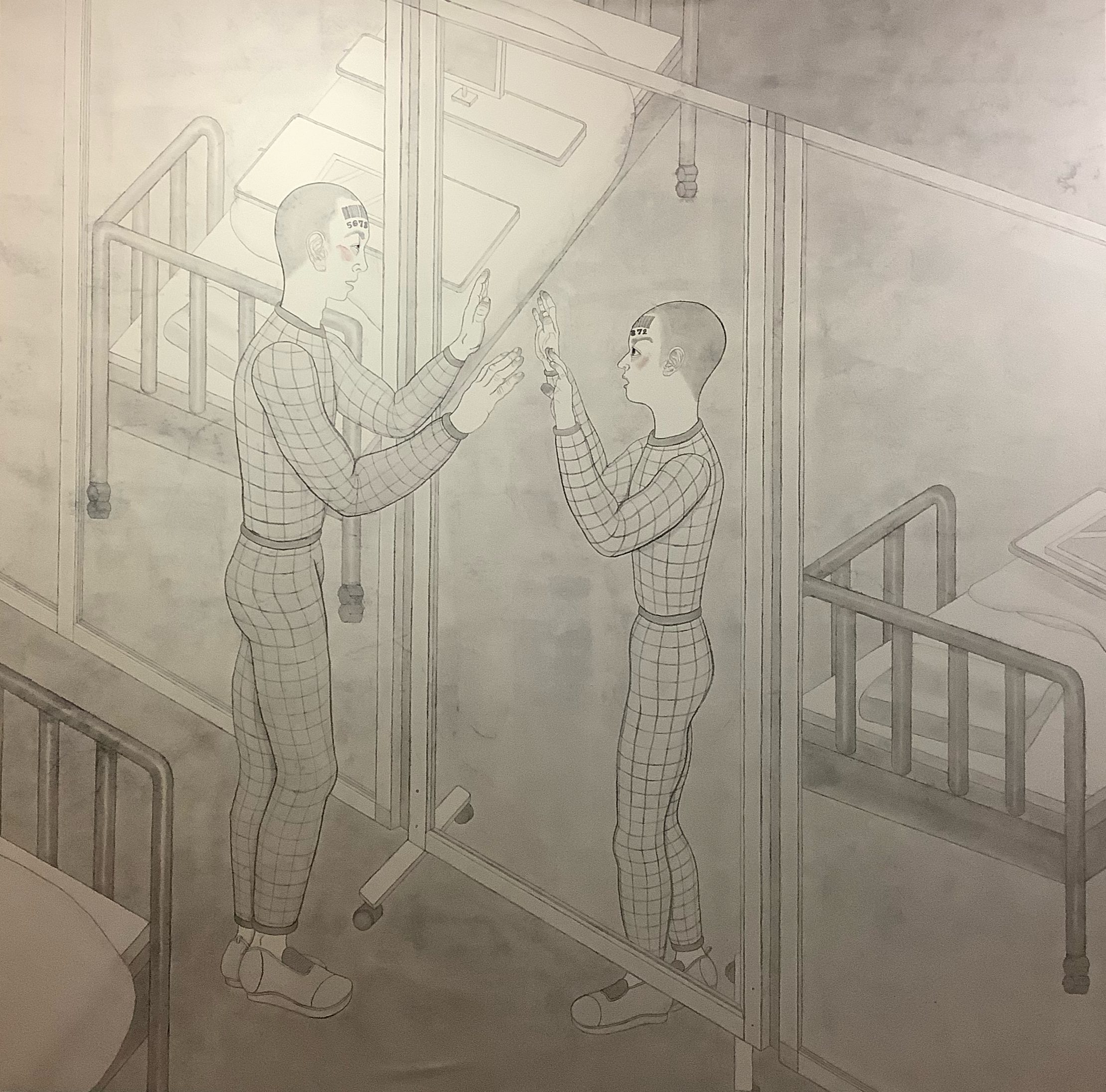
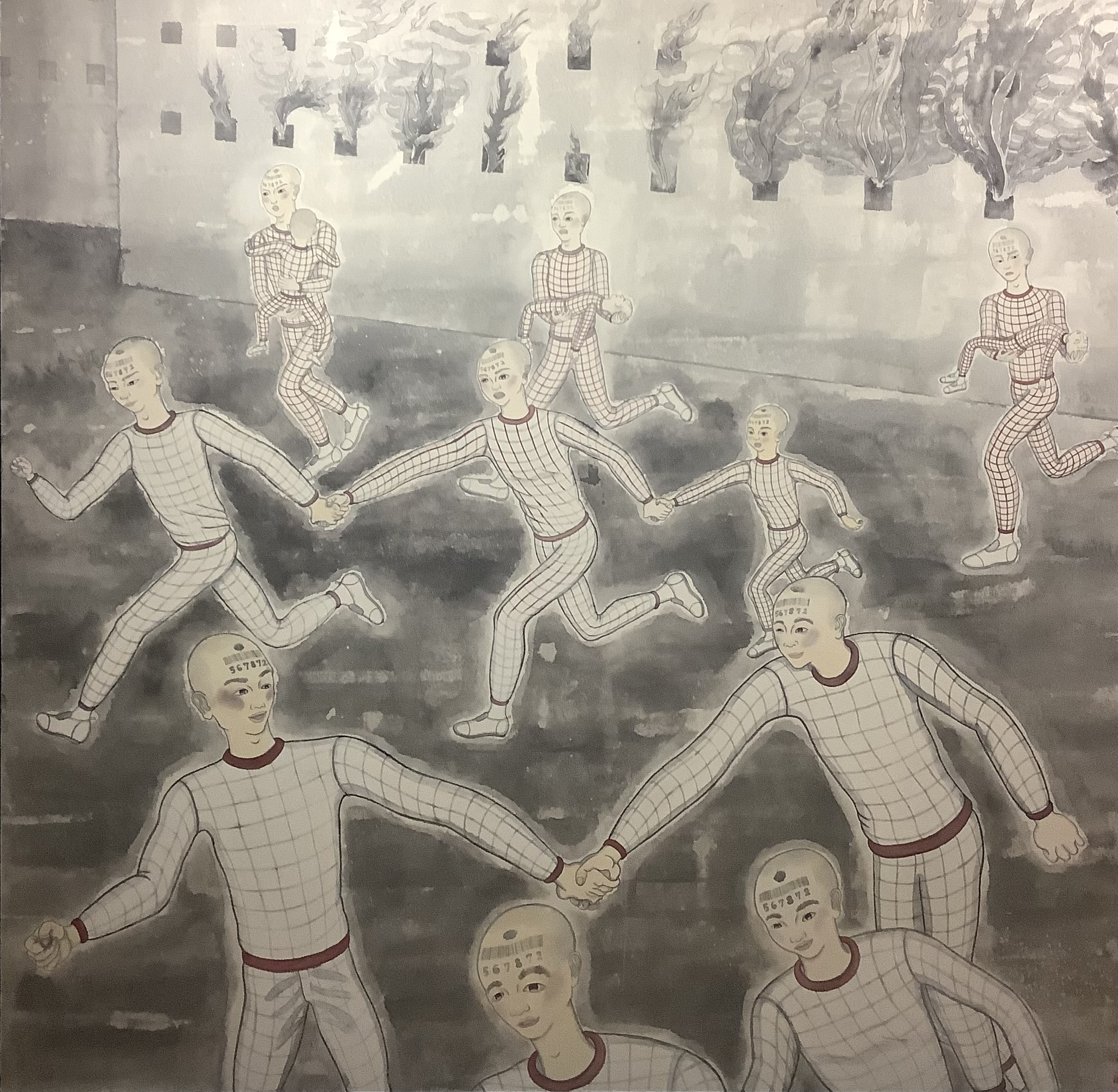
"When the corona epidemic occurred, the knowledge and information I had researched so far had accumulated, and I knew how the world works to some extent. It was an event that happened in such a situation, so I think I was able to draw rather smoothly. I don't have many works, but many of them range in size from No. 50 to No. 150. Perhaps because it contains a social message in addition to the size, customer reactions vary. Occasionally, there are people whose messages stick deeply and we receive unexpected responses."

――You have won many awards so far. How do you feel about this? 
"I didn't have a chance to hear from the judges, so I don't know what kind of points were evaluated, but when I received an award, I heard from someone that the teacher who recommended my painting said, 'It's a good picture that makes the viewer feel and think about various things,' and I was very happy. In fact, some of the works are sprinkled with codes, and I hope that people will read the message as a story of boys and girls, including that."

A place of activity that expands both domestically and internationally
――Please tell us about your works with fantastic themes.

 
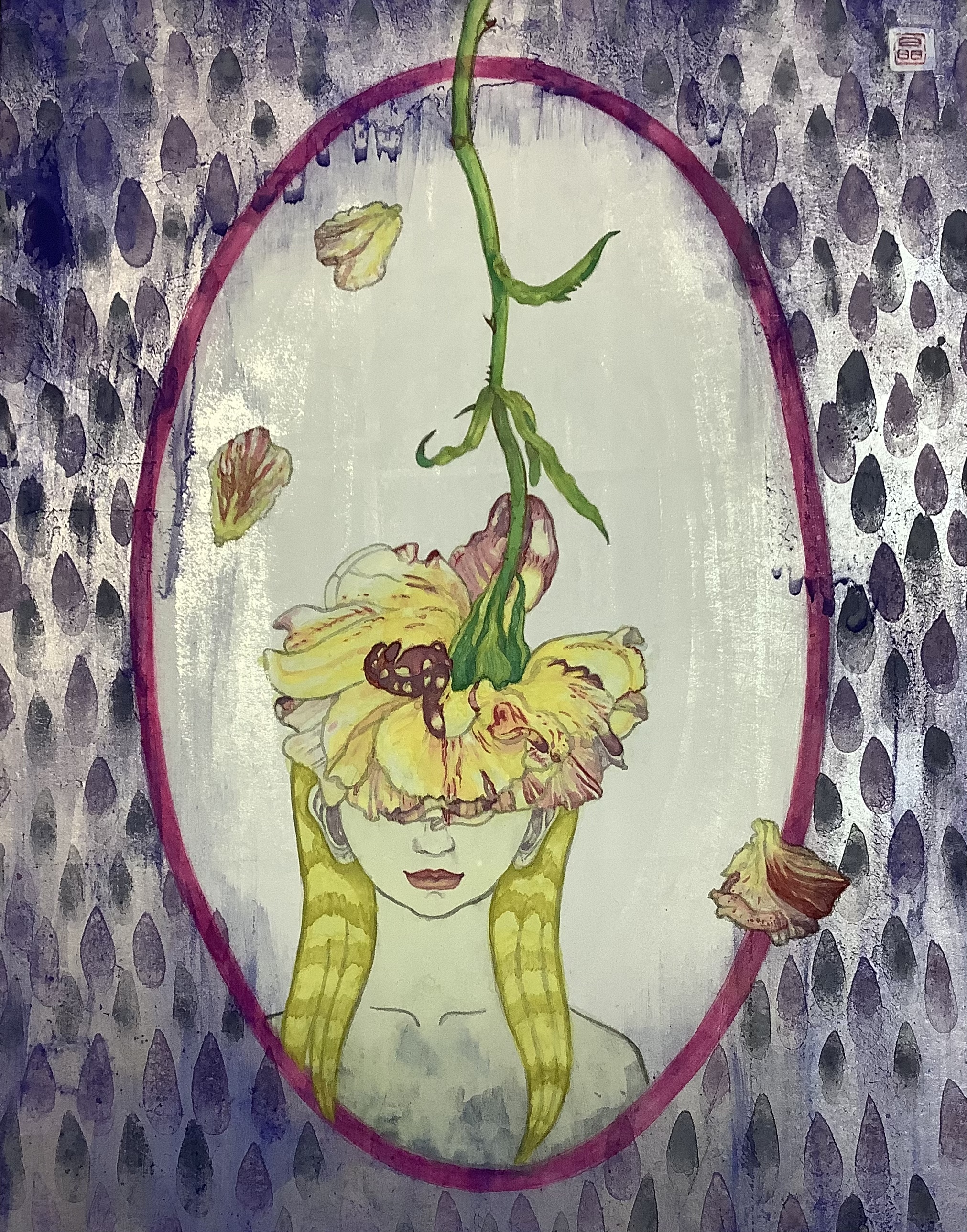
"When I continue to investigate the other side of society when painting works with social themes, I inevitably feel gloomy. In order to rebuild yourself, you also need bright and fun pictures. I draw in between working on works with social themes to maintain a balance of feelings. Also, I do not mix it with works with social themes during solo exhibitions. If you mix the two themes and display themes, I am sure that customers will be confused. That's how different the two themes are."

――Finally, please tell us about your future goals. 
"This year I participated in a group exhibition in New York for the first time, and I am very happy to exhibit in New York because it has been my dream for 15 years, and I would like to try my hand at exhibiting not only in New York but also overseas in the future. Our goal is also to exhibit the Corona series at a large venue in Tokyo. I have 19 paintings now, but I would like you to draw up to 30 and see all of them. I don't know where the 'end of Corona' is, but I want to continue drawing as long as I have an image in my mind."